




Central Heating System: Everything You Need to Know

- What is a central heating system?
- Different types of central heating systems
- What is the best type of heating system?
- How does the central heating system work?
- Central heating system and your boiler explained by diagrams
- How future proof is your central heating system?
- When do you need a new central heating system?
- FAQ
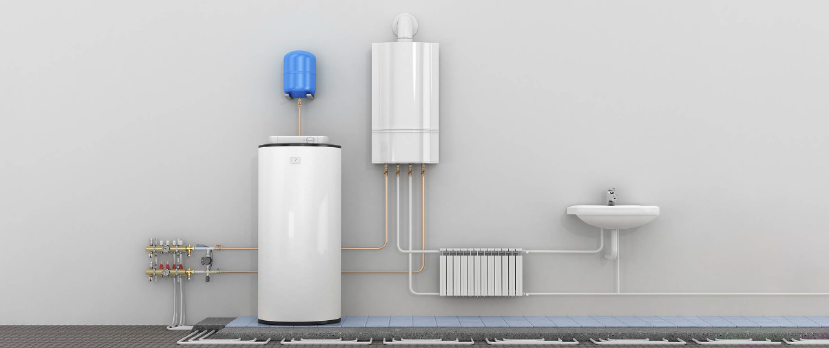
It's no doubt that your central heating system is a crucial part of your home, especially in the winters. In fact, 40% of your energy bill is spent on electricity and gas. As essential as heating systems are, there's still a lot of important information about them that you may not know. Especially if you're thinking about replacing one or getting a new central heating system.
Your central heating system, may consist of an electric boiler or gas boiler, does its work in the background of your house to provide you with warm water and heat in the winters. But, you need to consider what your current heating system offers, in order to make sure it’s still the right one for you.
By the end of this article, you'll understand the capabilities of your heating system and have the knowledge to choose a new central heating system that is right for you. But if you would like to get a head start, we highly recommend consulting a heating engineer. You can get free comparison quotes from up to 3 local heating engineers by clicking the button below.
Get your best deal
Quickly compare 3 FREE quotes
- Quotes from local engineers
- Get quotes today, installed tomorrow
- Finance options available
- Save up to £500 on installation
- Quotes from local engineers
- Get quotes today, installed tomorrow
- Finance options available
- Save up to £500 on installation

1,8 million quotes provided in 10 years
See more reviews:
What is a central heating system?
Central heating is a system that generates and distributes heat throughout a building. It does this by producing heat at one point and distributing it to the rest of the building through either air, steam, or water. Central heating systems are usually found in colder climates to heat buildings.
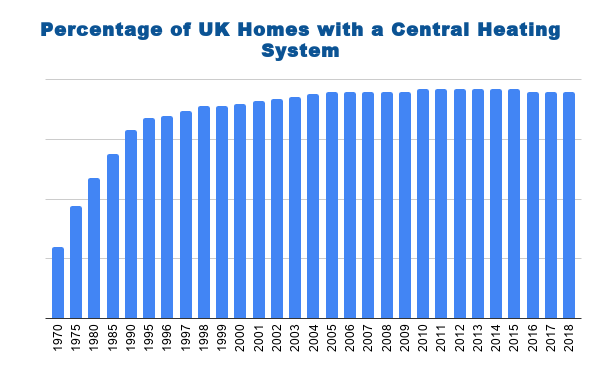
If you live in the UK, you most likely have a central heating system. Around 95% of homes in the UK have a central heating system, and 86% of homes specifically have a gas central heating system. It is also not uncommon to have heating systems that also distribute hot water to the taps in your home, especially if you have a hot water tank.
Central heating systems can be combined with other systems to form an HVAC system (Heating, Ventilation, and Air Conditioning) that can control the building climate. Most modern commercial buildings, like shopping centres, hotels, and office buildings, use central heating.
Different types of central heating systems
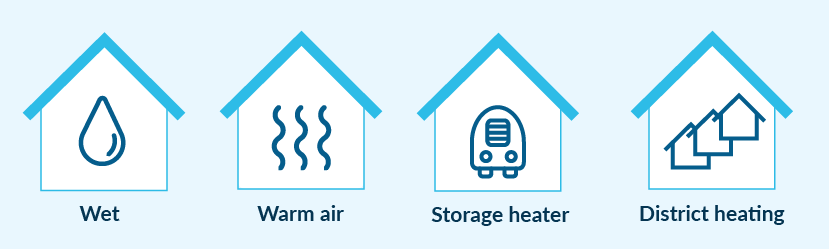
There are different types of central heating systems that change how the heat is generated and distributed. It's a fair assumption that you probably have a wet central heating system as 89% of homes in England have it. But we've described the 4 different central heating systems you could have so that you can properly identify yours.
Wet system
In a wet system, your boiler will heat water which is then pumped through a network of pipes that connect to radiators in the house. Each radiator has valves that control the rate at which water flows through them, and the amount of heat that's given off.
In the UK, wet systems are typically dual-purpose. They serve as a heating source for the building as well as a supply of hot water for taps. In tankless systems, the boilers operate on demand in which cold water is heated as soon as it comes from the tap. In contrast, when a hot water storage tank is used they need to be filled with hot water in advance.
Warm air system
Warm air systems, also known as dry systems, can still be found in some older homes. They peaked in the 1960s-70s, but have since been replaced by wet systems. You can still see a variation of this system in commercial buildings where they also circulate cool air (air conditioning).
In the dry system, cold air is brought in from outside, is heated by a central boiler, and then is circulated through the home using air ducts and vents. Each duct can be opened or closed to control the heat levels. However, as the massive ducts must be fitted into the building to avoid being obtrusive, dry systems can only be installed while a house is being built.
Storage heater system
Electric storage heater systems store heat overnight in firebricks. This heat is then gradually released into the house during the day. By mainly heating overnight and only during short periods throughout the day, the system can use cheaper, off-peak electricity on Economy 7 and Economy 10 tariffs.
Although storage heating systems primarily consist of individual storage heaters, they rely on a wiring system within the home so that they use off-peak electricity. Hence, this system, to some extent, can be described as a 'centralised' system.
District heating system
A district heating system generates heat in a single centralised power source and distributes it to several buildings in a particular area through insulated pipes. It allows for properties to not have separate and individual heating systems which can help save on energy bills and lower carbon emissions.
Properties connected to the district heating can have both heat and hot water delivered through the pipework. Unlike individual home heating systems, these properties no longer need to have a boiler or any heating system maintenance fees. However, only 2% of homes in the UK are powered by district heating, but as they're growing in popularity, you may soon see more.
What is the best type of heating system?
Any home with a wet central heating system using a relatively new gas boiler is already heating your home in one of the most efficient ways possible. If this is the case, switching to an alternative type is likely not the best central heating system choice at this point for your wallet or efficiency.
That is unless you want to reduce your carbon footprint by switching to renewable energy. Then, a good first step to consider is using a hybrid heating system in which you can pair your current boiler with a heat pump.
If you're wondering what the least efficient heating system is, then that is typically boilers older than 15 years. That means that if you have an old boiler at home and haven’t gotten a central heating boiler replacement, then you’re wasting energy and money.
This is because not only are modern boilers built to be more efficient and environmentally friendly but also because as boilers age, they convert less of the energy they use to heat. Boilers older than 10 years might lose up to 30% of their efficiency.
If the cost of getting a new boiler is what's stopping you from upgrading to the one that's most efficient for you, then we recommend you research to find the best price for your home. One way you can do this is by comparing quotes from several boiler engineers. That way you can see your choices without any obligation or cost before making your decision.
Get your best deal
Quickly compare 3 FREE quotes
- Quotes from local engineers
- Get quotes today, installed tomorrow
- Finance options available
- Save up to £500 on installation
- Quotes from local engineers
- Get quotes today, installed tomorrow
- Finance options available
- Save up to £500 on installation
1,8 million quotes provided in 10 years
See more reviews:
How does the central heating system work?
Your central heating system will operate differently depending on the system type. The majority of households in the UK have a wet central heating system. So understanding how this system works is important in understanding the capabilities of your current heating system and also helps you transition to a wet system.
A wet central heating system includes a heating appliance, usually a combi boiler, that is connected to pipework and radiators which circulate heat throughout the house. Depending on the system, either water or air will be heated. This heating process happens in one centralised location in the building.
Nowadays, most wet systems operate using two pipes. In this system, hot water is pumped to each radiator using one pipe, and then a second pipe collects the cooled water to return it back to the boiler for reheating. A single-pipe layout is less common as the hot water travels through each radiator and loses temperature throughout the system.
In the heating process, the boiler burns fuel to ignite a flame that heats a copper pipe containing water. Burning gas or oil are the most common ways to fuel boilers. As the copper pipe increases in temperature, the heat generated is transferred to the water within the pipe.
Depending on whether the boiler is a combi boiler or not, the heated water will be sent to a hot water storage tank or straight to a water tap. If in a storage tank, a pump transports either the hot water or air from the boiler to the radiators through pipes.
Because central heating systems with combi boilers heat water on-demand, there is no need for a storage tank. It also makes them more cost-effective. The water circulating from the boiler to the radiators warms the room primarily through convection which gradually increases the temperature of the room as it heats the cooler air in the room.
You can monitor boiler activity, such as the temperature, with a thermostat. This allows you to personalise your settings by switching the boiler on when the room temperature has dropped below the setting. Ultimately, how your central heating functions and the parts that are installed will depend on the type of heating system you choose.
Central heating system and your boiler explained by diagrams
Within a wet central heating system, there are 3 types of boilers you should be familiar with. Knowing what boiler you currently have will help you upgrade your heating system in the future.
Combi boilers
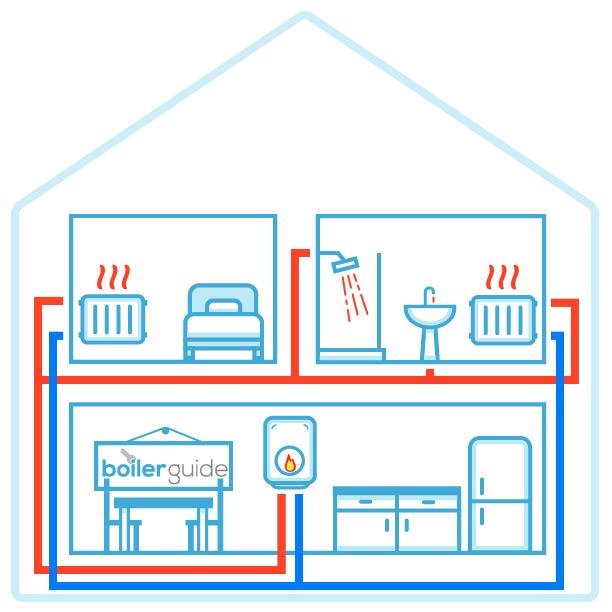
Combi boilers are fitted in most homes. These are compact heating systems with everything they need to heat a home wrapped up into the sealed central heating system within the boiler. That means no cylinder or tanks in the loft.
When hot water is needed, a combi boiler heats water directly from the mains supply and sends it straight to the tap.
While this does make them space-savers it does limit the amount of hot water they can provide. So they’re typically recommended for houses with 1-2 bathrooms.
Regular boilers
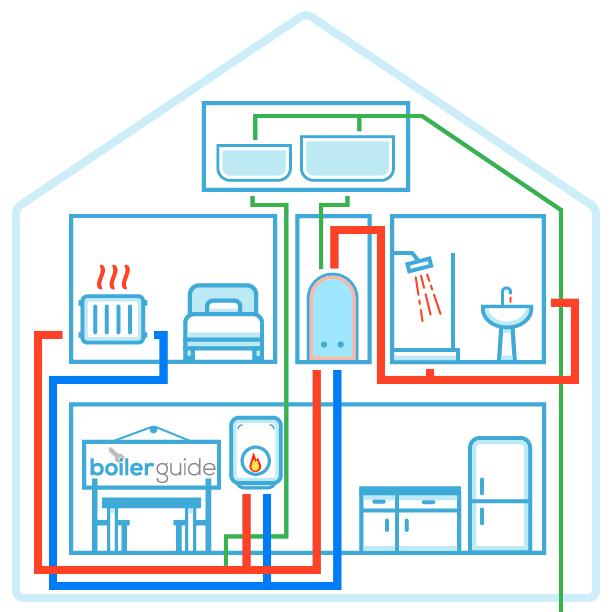
Regular boilers are the oldest type of boiler. You may have also heard them referred to as conventional boilers or traditional boilers.
Regular boilers are pretty outdated nowadays but are still installed - typically in older properties built in the 50s and 60s. As well as the boiler itself, they’re also made up of a hot water cylinder alongside feed and expansion tanks in the loft.
The feed tank stores cold water which is sent down to the boiler when the heating is turned on. As water is heated, it expands so the expansion tank offers additional space.
Then there’s the hot water cylinder, which stores domestic hot water until it’s needed.
As regular boilers are made up of so many different parts they need a lot of pipework. So you should only consider a new regular boiler as a direct replacement for an old one.
System boilers
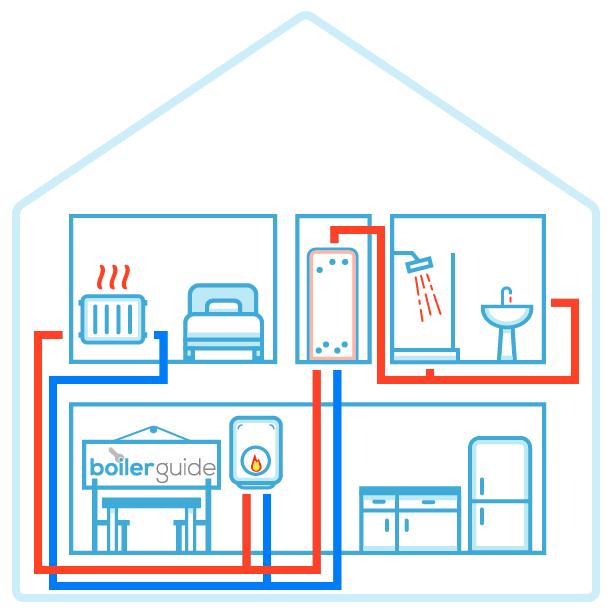
A system boiler is a modern take on the regular boiler. They take water directly from the mains - which removes the need for any tanks in the loft.
They heat the radiators directly, as and when needed, but also store domestic hot water in a cylinder. This allows them to meet the high demand for hot water in properties with multiple bathrooms.
How future proof is your central heating system?
The biggest threat to our central heating systems is their efficiency and their impact on the environment. Home heating accounts for approximately 30% of CO2 emissions. Of all the types of central heating systems, most of us count on a gas boiler to keep us warm.
That's because they’re efficient, effective, and reliable. However, they’re not great for the environment. Every time we turn the heating on, our gas boiler burns natural gas which emits carbon into the atmosphere - a leading cause of climate change.
The UK government is recognising this impact and has committed to having net zero emissions by 2050. Renewable heating systems, like heat pumps, biomass boilers, and electric boilers, hold many of the answers. They are carbon-neutral and can reduce heating bills. Here are some of the ways you can make your central heating system more future proof.
Air source heat pumps
Air source heat pumps use a small amount of electricity, yet achieve a 200-600% efficiency rate. They help limit greenhouse gas emissions and lower your household's carbon footprint. Switching from a traditional central heating system with radiators to an air to water heat pump is easier as they're designed with this purpose in mind. When switching, you need to consider to the air source heat pump cost as well.
Air to water heat pumps work by taking heat from the ambient air outside and using it to heat the water in your central heating system. One thing to keep in mind is that installing this heat pump requires a separate hot water tank.
Biomass boilers
A biomass boiler works similarly to a gas boiler by providing central heating and hot water. The key difference is that biomass boilers use a renewable fuel type, typically wood pellets, to supply energy. The fuel is considered carbon neutral as they emit the same level of CO2 that they absorb in their lifetime.
If you're still deciding between gas and biomass boilers, we've compared them here for you in our biomass boiler vs gas boiler article. The good news is that biomass boilers are designed to work with the standard domestic heating system, so they will connect to your heating system easily.
Electric boilers
An electric boiler is also a future proof solution that can also be used for central heating. They are similar to a gas or oil boiler, except it heats water for your house using electricity rather than gas or oil. The greatest efficiency of electric boilers is 99-100%, but the maximum efficiency of gas boilers is rarely higher than 93%.
As they don't directly burn gas or oil, they are considered to be more environmentally friendly. However, you need to consider where your electricity is being sourced from. Most electricity in the UK is generated from fossil fuels, which are carbon-intensive. However, it is increasingly popular to generate electricity from renewable energy sources.
Replacing a gas boiler with an electric central heating system boiler is an excellent way to reduce your household's carbon footprint. An electric boiler is able to replace any other small/medium boiler. However, electric boilers are only suitable for the central heating and hot water needs of smaller houses.
Government grants
While renewable heating systems are better for the environment and more future-proof than gas boilers, they are also more costly. The UK government has become increasingly sensitive to and concerned about accessibility to renewable energy sources.
The government created subsidy schemes to encourage UK residents to transition to more environmentally friendly green resources. Therefore, you may be able to receive money from government grant schemes to help pay for the cost of transitioning to a renewable energy system. Find out about the latest available grants and schemes here.
We understand that getting a renewable energy heating system may still be expensive for you now. If this is the case, we recommend getting a new and more affordable boiler now and consider more low-carbon solutions later when the cost of renewable energy has become more economical.
Boilers are the most efficient that they've ever been. So, getting a new boiler now lets you maximise its full lifespan before any impact from the expected gas boiler ban in 2035.
With that being said, you'll still want to make sure you're finding the best installation price for your home. We recommend you to first compare the offers of different heating engineers before making your decision. We can help you do this comparison at no cost or obligation by providing you with offers from up to 3 heating engineers.
Get your best deal
Quickly compare 3 FREE quotes
- Quotes from local engineers
- Get quotes today, installed tomorrow
- Finance options available
- Save up to £500 on installation
- Quotes from local engineers
- Get quotes today, installed tomorrow
- Finance options available
- Save up to £500 on installation
1,8 million quotes provided in 10 years
See more reviews:
When do you need a new central heating system?
You likely won't need to replace your full central heating system all at once, but some parts may wear down faster than others. Here are some factors to consider before replacing your heating system.
Age. The age of your entire system is an indication of parts growing old and the system not working as efficiently. Boilers should usually be replaced after 10 to 15 years, and if the rest of the system is also reaching the end of its lifespan, it is time to think about replacing it.
Low efficiency. Over time, heating systems lose efficiency. You might notice that it takes longer to heat your home or that your energy bill is higher than normal. These may be signs that your system is having to use more energy to operate normally. By upgrading your boiler, you can renew the life of your current heating system and save on your energy bill by getting a more modern and energy-efficient system.
High repair cost. Your heating system should have annual service checks to ensure all parts are working properly. However, there are inevitable repairs that will need to be made over time. If the cost to repair an issue is much higher than it is to replace the entire system, then consider asking your heating engineer if it's time to replace it.
FAQ
What type of central heating system is best?
The best central heating system type depends on the size, structure, and heating demands of your household. Your central heating system can have different types of boilers that each provide heating to your home differently.
What are the 4 types of central heating systems?
Central heating systems can broadly be divided into 4 different categories: wet systems, warm air systems, electric storage heating systems, and district heating systems. The wet central heating system is the most popular type of heating in the UK, but if you have an older heating system, yours may be different.
How do central heating systems work?
Central heating systems work by doing the entire heating process in one centralised location and then distributing it throughout the rest of the building using pipes or air ducts. How your central heating system works ultimately depends on the system type.
How do I know what central heating system I have?
86% of houses in the UK have a wet central heating system that uses gas fuel. So it is a fair assumption that you most likely have this as well. On the off chance that you don't, yours most likely differs by the fuel type or boiler type.
How much is a new central heating system?
Overall, the cost of installing central heating will be between £3,000 and £5,000. However, the cost varies depending on the size of your property, the type of boiler being installed, and the heating engineer completing the work.
Get your best deal
Quickly compare 3 FREE quotes
- Quotes from local engineers
- Get quotes today, installed tomorrow
- Finance options available
- Save up to £500 on installation
- Quotes from local engineers
- Get quotes today, installed tomorrow
- Finance options available
- Save up to £500 on installation
1,8 million quotes provided in 10 years
See more reviews: